
| mla clipboard |
Bauer M. "Vorlesung Satire - Sentiment - Sensation: English Literature in the Eighteenth Century, 13. und 14. Stunde.", timms video, Universität Tübingen (2025): https://timms.uni-tuebingen.de:443/tp/UT_20251125_001_ws2526englit18th_0001. Accessed 22 Oct 2026. |
| apa clipboard |
Bauer, M. (2025). Vorlesung Satire - Sentiment - Sensation: English Literature in the Eighteenth Century, 13. und 14. Stunde. timms video: Universität Tübingen. Retrieved October 22, 2026 from the World Wide Web https://timms.uni-tuebingen.de:443/tp/UT_20251125_001_ws2526englit18th_0001 |
| harvard clipboard |
Bauer, M. (2025). Vorlesung Satire - Sentiment - Sensation: English Literature in the Eighteenth Century, 13. und 14. Stunde [Online video]. 25 November. Available at: https://timms.uni-tuebingen.de:443/tp/UT_20251125_001_ws2526englit18th_0001 (Accessed: 22 October 2026). |
| file download | bibtex endnote |
current
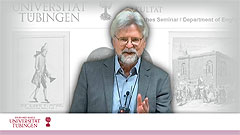
Vorlesung Satire - Sentiment - Sensation: English Literature in the Eighteenth Century, 13. und 14. Stunde
(2025-11-25)
Vorlesung Satire - Sentiment - Sensation: English Literature in the Eighteenth Century, 3. und 4. Stunde
(2025-10-21)
Vorlesung Satire - Sentiment - Sensation: English Literature in the Eighteenth Century, 5. und 6. Stunde
(2025-10-28)
Vorlesung Satire - Sentiment - Sensation: English Literature in the Eighteenth Century, 7. und 8. Stunde
(2025-11-04)
Vorlesung Satire - Sentiment - Sensation: English Literature in the Eighteenth Century, 9. und 10 Stunde
(2025-11-11)
Vorlesung Satire - Sentiment - Sensation: English Literature in the Eighteenth Century, 11. und 12. Stunde
(2025-11-18)
Vorlesung Satire - Sentiment - Sensation: English Literature in the Eighteenth Century, 15. und 16. Stunde
(2025-12-02)
Vorlesung Satire - Sentiment - Sensation: English Literature in the Eighteenth Century, 17. und 18. Stunde
(2025-12-09)
Vorlesung Satire - Sentiment - Sensation: English Literature in the Eighteenth Century, 19. und 20. Stunde
(2025-12-16)
Vorlesung Satire - Sentiment - Sensation: English Literature in the Eighteenth Century, 21. und 22. Stunde
(2026-01-13)
Vorlesung Satire - Sentiment - Sensation: English Literature in the Eighteenth Century, 23. und 24. Stunde
(2026-01-20)
Vorlesung Satire - Sentiment - Sensation: English Literature in the Eighteenth Century, 25. und 26. Stunde
(2026-01-27)
Vorlesung Satire - Sentiment - Sensation: English Literature in the Eighteenth Century, 27. und 28. Stunde
(2026-02-03)